Role of Nature
Proxies
Who speaks for the living world?
Four models of nature representation in corporate governance. Explore each one, then take a short quiz to find the right starting point for your organisation.
Introduction
Nature Is Often a Silent Stakeholder in the Room Where Decisions Are Made
Boards govern people, capital, and strategy. But the ecosystems underpinning every decision — the watersheds, the biodiversity, the living systems — are rarely in the room. And when they are, it is usually too late.
Governance has expanded before. Shareholders, communities, beneficiaries — each a hard-won addition to the circle of who gets heard. However, that circle has never reliably extended to the natural systems on which every organisation, without exception, depends.
Why Nature Proxies?
Traditionally, a proxy is a legal authorisation for one person to act on behalf of another, most commonly in voting or decision-making. Nature Proxies apply the same principle to the non-human world, sitting on boards to represent the rights and interests of Nature.
Four Models for Representation
This tool introduces four models for how nature can participate in governance. At one end, nature serves as inspiration, shaping values and culture. At the other, nature holds an ownership stake with full governance rights. In between, advisory and director models offer pathways for organisations at different stages of readiness.
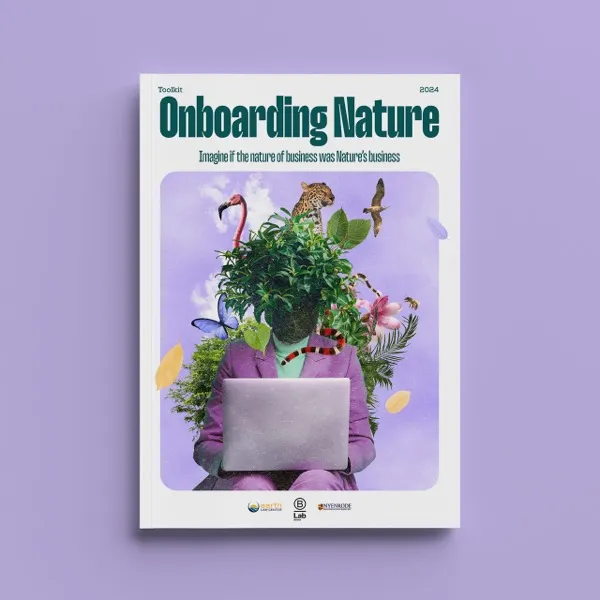
For further guidance, download the toolkit developed by the Earth Law Center, B Lab Benelux and Nyenrode University.
What is a Nature Proxy?
A Nature Proxy is a person appointed to represent the natural world in corporate governance. Ecosystems cannot attend board meetings or cast votes, so humans must speak on their behalf. The question is not whether to include nature, but how much authority that representation should carry and how deeply it sits within your governance structure.
Why it matters
The Case for Nature in the Boardroom
Nature is not heard in human systems
Nature speaks — through ecological signals, biodiversity loss, and climate disruption — but human governance systems are not designed to listen. Without deliberate representation, nature's interests remain invisible in the decisions that affect it most.
Governance shapes outcomes
Who sits at the table determines what gets decided. Organisations with ecological representation make different decisions on capital allocation, acquisitions, and long-term strategy.
Start where you are
There is no single right answer. The four models form a progression from cultural values to legal ownership. This tool helps you find the starting point that matches your organisation's readiness and ambition.
Ready to Begin?
Explore all four models, then take a short quiz to find your starting point.
The Four Models
0 of 4 explored · tap any card to learn more
Model Comparison
| Inspiration | Advisor | Director | Shareholder | |
|---|---|---|---|---|
| Authority | Purpose | Consultative | Decision-Making | Ownership |
| Entrenchment | Policy | Governance | Constitutional | Legal |
| Decision Power | None | Advisory only | Voting rights | Shareholder rights |
| Reversibility | Easy | Moderate | Harder | Very difficult |
| Typical Timeline | Immediate | 3-6 months | 6-18 months | 12-36 months |
Find Your Starting Model
Five questions about your organisation. Your answers will point to the governance model that best fits your current readiness.
0 of 5 answered
Your recommended starting point
How Your Answers Mapped
Each answer pointed to one of the four models. The model with the most points is your recommended starting point.
Implementation Pathway
Your Next Step on the Progression
Once you've established your starting model, this is the natural next step as your governance matures.
Work with Us
Ready to bring nature's voice to your boardroom? Our team works with organisations to embed nature representation into governance, strategy, and decision-making.
Get in Touch